

Alcoholic Beverages Market to Reach USD 3,002.33 Billion by 2035 Driven by Premiumization Trends at 2.37% CAGR
Alcoholic Beverages Market
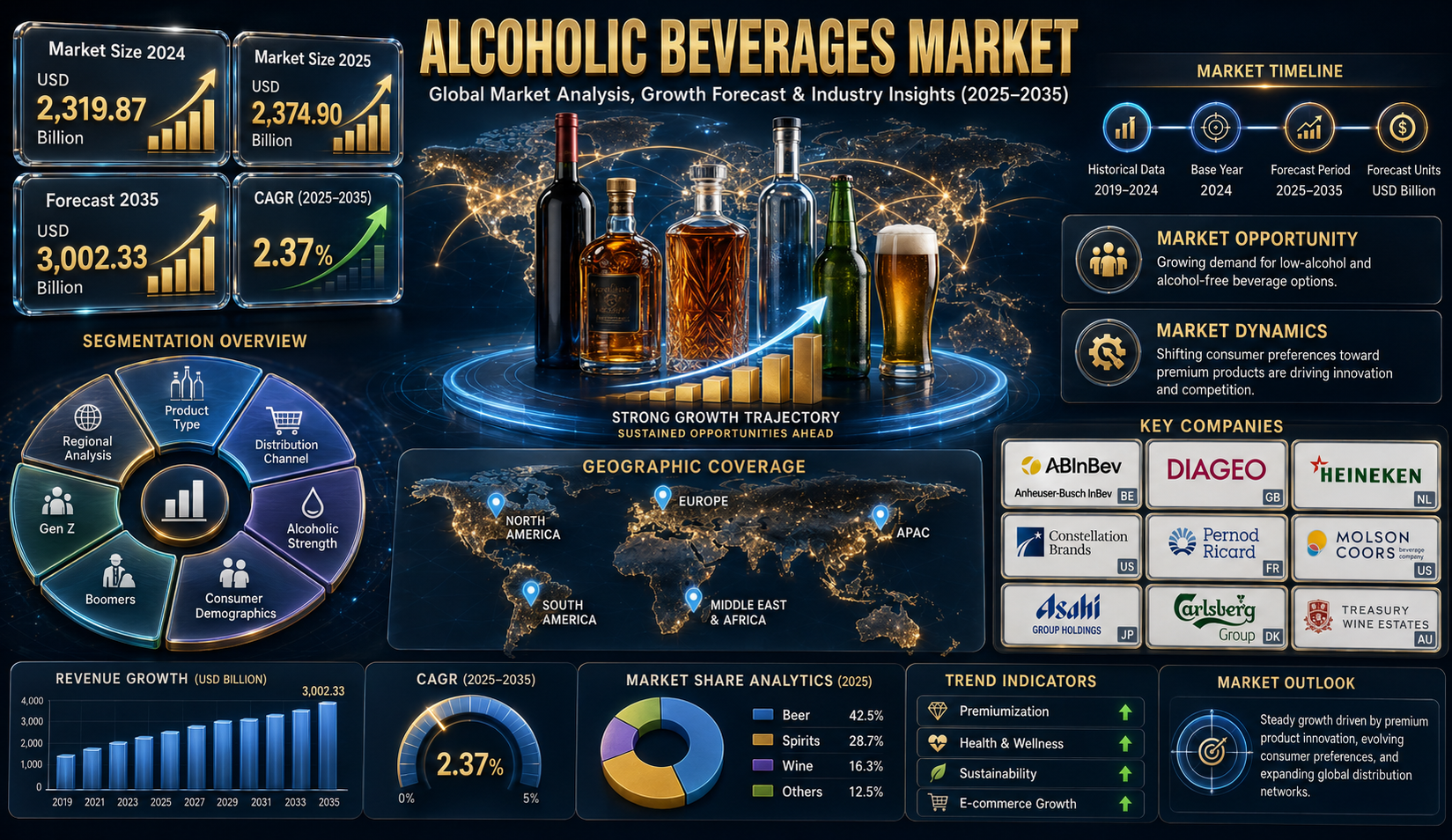
Alcoholic Beverages Market is projected to grow from USD 2,374.9 billion in 2025 to USD 3,002.33 billion by 2035 at a CAGR of 2.37%.
NEW YORK, NY, UNITED STATES, June 22, 2026 /EINPresswire.com/ --The Alcoholic Beverages Market remains one of the largest and most influential consumer goods industries globally, supported by evolving consumer preferences, expanding urban populations, rising disposable incomes, and continuous product innovation. Valued at USD 2,319.87 billion in 2024, the market is expected to increase from USD 2,374.9 billion in 2025 to USD 3,002.33 billion by 2035, registering a CAGR of 2.37% during the forecast period. Despite its mature nature in many developed economies, the industry continues to find new growth opportunities through premium offerings, flavored products, ready-to-drink beverages, and alcohol-free alternatives.
The market's expansion is also driven by changing lifestyles and social drinking cultures across emerging economies. Younger consumers are increasingly seeking unique experiences, craft beverages, premium spirits, and innovative flavor profiles. At the same time, manufacturers are responding to health-conscious trends by introducing low-calorie, low-alcohol, and alcohol-free beverage options. Digital transformation in retail channels and the growth of e-commerce platforms are further enhancing market accessibility and consumer engagement worldwide.
Competitive Landscape and Key Players
The competitive environment of the Alcoholic Beverages Market is characterized by strong global brands, extensive distribution networks, and continuous investments in product development. Major companies operating in the market include Anheuser-Busch InBev, Diageo, Heineken, Constellation Brands, Pernod Ricard, Molson Coors Beverage Company, Asahi Group Holdings, Carlsberg Group, and Treasury Wine Estates. These industry leaders focus on acquisitions, premium product launches, sustainability initiatives, and geographic expansion strategies to strengthen their market positions and capture evolving consumer demand.
One of the primary growth drivers of the market is the rising demand for premium alcoholic beverages. Consumers across both developed and developing regions are increasingly willing to pay higher prices for superior quality products, unique flavors, and authentic brand experiences. Premium wines, craft beers, aged whiskies, and artisanal spirits continue to gain popularity among consumers seeking exclusivity and enhanced taste profiles. This trend is encouraging manufacturers to expand their premium portfolios and invest in brand storytelling.
Another significant factor supporting market growth is the increasing popularity of social gatherings, entertainment events, tourism activities, and hospitality services. Restaurants, bars, hotels, and event venues remain key consumption points for alcoholic beverages. The recovery and expansion of global tourism have further contributed to higher beverage consumption, especially in regions known for vibrant nightlife and cultural festivals.
“Free Sample Copy” – Access A Complimentary Copy of Our Report to Explore Its Content and Insights
https://www.marketresearchfuture.com/sample_request/3190
Based on product type, the market is segmented into beer, wine, spirits, ready-to-drink beverages, and others. Beer continues to dominate global consumption volumes due to its affordability, widespread availability, and strong cultural acceptance across numerous countries. However, premium and craft beer categories are growing faster than traditional mass-market products as consumers seek differentiated experiences. Innovations in flavors, ingredients, and brewing techniques are further driving category growth.
The wine segment represents a substantial portion of market revenue, particularly in Europe, North America, and selected Asia-Pacific countries. Rising consumer awareness regarding wine varieties, food pairing culture, and premium wine experiences is supporting demand. Sparkling wines, organic wines, and premium vintages are witnessing increased popularity among affluent consumers and younger demographics seeking sophisticated drinking options.
The spirits segment remains highly profitable due to premium pricing and strong brand loyalty. Whiskey, vodka, rum, gin, tequila, and liqueurs continue to experience steady demand globally. Premium and ultra-premium spirits have emerged as major revenue generators, supported by rising consumer interest in mixology, cocktail culture, and luxury consumption experiences. Additionally, ready-to-drink cocktails are becoming increasingly popular among convenience-oriented consumers.
By distribution channel, the Alcoholic Beverages Market is categorized into on-trade and off-trade channels. The on-trade segment includes bars, pubs, restaurants, clubs, hotels, and entertainment venues where beverages are consumed on-site. This channel benefits from social experiences and premium consumption patterns. Meanwhile, the off-trade segment, which includes supermarkets, hypermarkets, liquor stores, convenience stores, and online retail platforms, continues to expand due to convenience and broader product accessibility.
The rapid growth of e-commerce has significantly transformed alcohol retailing. Consumers increasingly prefer online platforms that offer extensive product selections, personalized recommendations, doorstep delivery, and competitive pricing. Digital channels are helping brands reach broader audiences while improving customer engagement through targeted marketing campaigns and subscription-based services.
In terms of alcoholic strength, the market includes low-alcohol, medium-strength, and high-alcohol beverages. Growing health awareness is boosting demand for low-alcohol and alcohol-free alternatives. Consumers are seeking products that align with wellness goals while maintaining social drinking experiences. This shift has encouraged manufacturers to invest heavily in product innovation within the low-alcohol segment, creating one of the most promising growth opportunities in the market.
Consumer demographic analysis highlights significant differences in purchasing behavior across age groups. Baby Boomers continue to represent a stable customer base, particularly for premium wines and established spirit brands. Their purchasing decisions are often influenced by quality, heritage, and brand reputation. This demographic contributes substantially to premium product sales and long-term brand loyalty.
Generation Z is emerging as a transformative consumer group within the market. Unlike previous generations, Gen Z consumers often prioritize moderation, sustainability, authenticity, and product transparency. Their growing preference for low-alcohol beverages, flavored products, ready-to-drink cocktails, and alcohol-free alternatives is reshaping product development strategies across the industry. Social media influence and digital engagement also play a crucial role in their purchasing decisions.
Regionally, North America remains a major market due to strong consumer spending, premiumization trends, and a well-established distribution infrastructure. The United States continues to be a key contributor, supported by robust demand for craft beer, premium spirits, and innovative beverage formats. Growing interest in wellness-oriented products is also driving low-alcohol and alcohol-free beverage adoption across the region.
Europe represents another significant market, benefiting from its rich heritage in beer, wine, and spirits production. Countries such as France, Germany, Italy, Spain, and the United Kingdom maintain strong consumption levels while also serving as major export hubs. Premium wines, craft beverages, and sustainable production practices are key trends shaping the European market landscape.
The Asia-Pacific region is expected to experience notable growth throughout the forecast period. Rising disposable incomes, urbanization, changing lifestyles, and expanding middle-class populations are increasing alcohol consumption across countries such as China, India, Japan, South Korea, and Australia. International brands are actively expanding their presence in the region to capitalize on evolving consumer preferences and growing demand for premium products.
South America continues to offer attractive growth opportunities, particularly in Brazil, Argentina, and Chile. Expanding urban populations and increasing interest in premium beverages are supporting market development. Similarly, the Middle East and Africa region is witnessing gradual growth driven by tourism, hospitality sector expansion, and changing consumer lifestyles in selected markets.
Looking ahead, sustainability will become an increasingly important competitive differentiator within the Alcoholic Beverages Market. Companies are focusing on environmentally responsible packaging, carbon footprint reduction, water conservation, and ethical sourcing practices. Consumers are showing greater interest in brands that demonstrate environmental and social responsibility, creating opportunities for sustainable innovation and long-term brand value creation.
Overall, the Alcoholic Beverages Market is expected to maintain steady growth through 2035. While mature markets may experience moderate expansion, emerging economies, premium product categories, and low-alcohol innovations will continue to create significant opportunities. Companies that successfully balance consumer preferences for quality, convenience, sustainability, and health-conscious options will be well-positioned to capture future market growth.
Frequently Asked Questions (FAQs)
1. What is the projected size of the Alcoholic Beverages Market by 2035?
The Alcoholic Beverages Market is projected to reach USD 3,002.33 billion by 2035, growing from USD 2,374.9 billion in 2025.
2. What is the major growth opportunity in the Alcoholic Beverages Market?
A key growth opportunity is the increasing demand for low-alcohol and alcohol-free beverages, driven by changing consumer preferences toward healthier lifestyle choices.
Read Our Related Research Report
Dessert Wine Market:
https://www.marketresearchfuture.com/reports/dessert-wine-market-34626
Premium Wine Market:
https://www.marketresearchfuture.com/reports/premium-wine-market-35495
Wine Tourism Market:
https://www.marketresearchfuture.com/reports/wine-tourism-market-36889
Brewing Material Market:
https://www.marketresearchfuture.com/reports/brewing-material-market-38034
White Wine Market:
https://www.marketresearchfuture.com/reports/white-wine-market-32304
Sagar Kadam
Market Research Future
+1 628-258-0071
email us here
Visit us on social media:
LinkedIn
Facebook
X
Legal Disclaimer:
EIN Presswire provides this news content "as is" without warranty of any kind. We do not accept any responsibility or liability for the accuracy, content, images, videos, licenses, completeness, legality, or reliability of the information contained in this article. If you have any complaints or copyright issues related to this article, kindly contact the author above.
